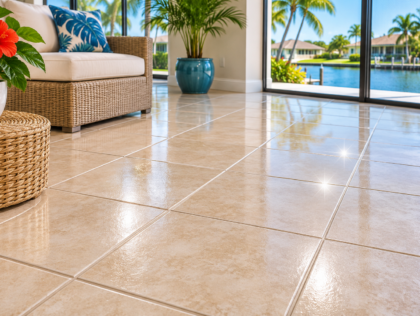
Professional Travertine Cleaning, Polishing, Honing, and Sealing in Southwest Florida
Travertine brings timeless beauty to homes and businesses throughout Southwest Florida. Its natural colors and unique patterns make it a popular choice for floors, bathrooms, showers, patios, and pool decks.
Unfortunately, everyday foot traffic, embedded dirt, spills, ineffective floor maintenance, and Florida’s outdoor conditions can leave travertine looking dull, stained, or worn.
The good news? You may not need to replace your travertine to restore its beauty.
Since 2007, Tru-Clean Surface Care has provided professional travertine cleaning, polishing, honing, and sealing throughout Lee, Collier, and Charlotte counties.
Our family-owned company specializes in restoring natural stone surfaces and helping homeowners protect their investment.
Why Travertine Requires Specialized Care
These characteristics give travertine its distinctive appearance but also make it vulnerable to certain types of damage.
Unlike ceramic or porcelain tile, travertine requires special care.
Its porous surface can absorb spills, while acidic substances such as vinegar, lemon juice, and certain household cleaners can cause permanent etching.
Florida’s sandy soil creates another challenge. Sand tracked indoors acts like fine sandpaper, gradually wearing away the stone’s finish.
Professional maintenance helps preserve travertine’s natural beauty while reducing premature wear.
Five Common Travertine Problems We Restore
At Tru-Clean Surface Care, we restore travertine more often than any other natural stone throughout Southwest Florida.
Here are five common problems we encounter.
- Pits and Holes
Travertine contains natural cavities, many of which are filled during manufacturing. Over time, factory fillers can loosen, leaving openings that collect dirt and may develop chipped edges.
- Dull, Worn Traffic Areas
Heavy foot traffic and abrasive sand gradually wear away the stone’s finish, leaving noticeable dull areas in kitchens, hallways, and entryways.
- Embedded Dirt and Discolored Grout
Travertine’s pores and textured surfaces trap dirt that ordinary mopping may not remove. Grout lines often become noticeably darker.
- Etching From Acidic Substances
Wine, citrus juice, vinegar, and acidic cleaners can react with travertine, leaving dull spots. Unlike ordinary stains, these marks generally require professional refinishing.
- Weathered Outdoor Travertine
Florida’s sunshine, rain, pool water, and outdoor contaminants can leave patios and pool decks looking discolored or worn. Smooth surfaces may also become slippery when wet.
Fortunately, professional travertine restoration by Tru-Clean Surface Care can correct many of these problems.
Professional Travertine Tile Cleaning
Have you ever mopped your travertine floor only to discover it still looks dirty?
That’s because traditional mopping or steam cleaning often fails to remove soil embedded in the stone’s natural pores and textured areas.
At Tru-Clean Surface Care, we use professional stone-safe cleaning solutions and specialized equipment to remove accumulated grime.
Our travertine tile cleaning services help:
- Remove embedded dirt and buildup
- Improve the appearance of discolored grout
- Restore a cleaner, more uniform appearance
- Prepare surfaces for additional restoration treatments
We select cleaning products specifically suited for calcium-based natural stone, avoiding harsh acids that can damage travertine.
Sometimes a thorough professional cleaning is all that’s needed to improve your floor’s appearance.
However, scratched or etched surfaces may require additional restoration.
Travertine Honing and Polishing
While cleaning removes dirt, honing and polishing restore the stone’s finish.
Travertine Honing
Honing uses specialized diamond abrasive wheels and polishing powders to smooth the stone and reduce visible surface imperfections such as scratches, worn traffic lanes, and etching.
Think of it like refinishing a beautiful piece of wooden furniture. Cleaning removes the dirt, but refinishing restores the surface itself.
Professional honing can help correct:
- Light scratches and surface wear
- Dull traffic patterns
- Acid etching
- Uneven or patchy finishes
Honing typically produces a smooth, matte or satin appearance that complements travertine’s natural beauty.
Travertine Polishing
Would you prefer a little more shine?
Professional polishing further refines the surface to create a brighter, more reflective finish.
Depending on the stone, we can achieve anything from a subtle satin sheen to a more polished appearance.
Unlike waxes or topical coatings, professional polishing refines the stone itself, creating a natural-looking finish.
Repairing Travertine Pits and Holes
Those small holes appearing in your travertine don’t mean the flooring needs replacing.
Natural cavities and failing factory fillers are common problems.
Our technicians can repair many of these openings using specialized fillers selected to blend with the surrounding stone.
Once the repairs cure, we can level and refinish the filled areas.
Addressing pits and holes early helps prevent dirt accumulation and additional edge damage.
Not every natural cavity requires filling, especially on intentionally textured travertine. We’ll recommend repairs based on your stone’s condition and appearance.
Travertine Sealing and Protection
Because travertine is porous, liquids can penetrate its surface and cause staining.
A professionally applied penetrating sealer helps reduce absorption and makes routine cleaning easier.
Benefits of travertine sealing include:
- Improved resistance to many common stains
- Reduced moisture absorption
- Easier everyday maintenance
- Protection for porous stone surfaces
However, sealing doesn’t make travertine completely stainproof or prevent acid etching.
Resealing frequency (typically every 3-5 years) depends on foot traffic, stone porosity, cleaning habits, and the sealer used.
During our evaluation, we can test water absorption to help determine whether your travertine needs additional protection.
Outdoor Travertine Patios and Pool Decks
Southwest Florida homeowners love outdoor living, and travertine is a popular choice for lanais, patios, and swimming pool surrounds.
Unfortunately, outdoor surfaces endure intense sunshine, rain, dirt, pool chemicals, and biological growth.
These conditions can leave travertine looking weathered and discolored.
Tru-Clean Surface Care provides professional outdoor travertine cleaning and restoration to help revive these surfaces.
Depending on your stone’s condition, we may recommend professional cleaning, repairs, or sealing.
We also offer compatible color-enhancing sealers that can deepen travertine’s natural colors.
Slip-Resistant Pool Deck Treatments
Wet outdoor surfaces can become slippery, creating potential hazards around swimming pools.
Tru-Clean Surface Care offers specialized slip-resistant treatments for suitable stone and tile surfaces.
These treatments improve traction and help reduce slipping risks while preserving the surface’s appearance.
Our Professional Travertine Restoration Process
Every travertine surface is different. That’s why we customize our restoration recommendations.
Our process may include six steps:
Inspect and evaluate: Examine the finish, damage, worn areas, and sealer condition.
Deep clean: Remove embedded soil and grime using professional stone-safe products.
Repair: Fill pits and holes with specialized materials as needed.
Hone: Reduce scratches, etching, and uneven wear.
Polish: Restore the desired level of sheen.
Seal: Apply a compatible protective sealer when recommended.
Not every floor needs every treatment.
Some surfaces require only professional cleaning and sealing, while others benefit from a more comprehensive restoration.
Our goal is to recommend the services your stone actually needs.
Why DIY Cleaning Can Damage Travertine
Many homeowners assume that products labeled “tile and grout cleaner” are safe for travertine.
Unfortunately, that isn’t true.
Acidic cleaners can permanently etch the surface. Abrasive pads may cause scratches, while unsuitable sealers can create unwanted residue, peeling, or discoloration.
Travertine is natural stone, not ordinary ceramic tile.
Using appropriate cleaning products and restoration methods is essential.
If you’re unsure whether a cleaner is safe, consult a natural stone professional before using it.
Maintaining Your Travertine Between Professional Cleanings
Keeping restored travertine beautiful doesn’t have to be difficult.
Follow these simple recommendations:
- Remove sand regularly using a soft broom or microfiber dust mop.
- Use pH-neutral cleaners specifically designed for natural stone.
- Clean spills promptly, especially acidic liquids.
- Protect high-traffic areas with appropriate entrance mats.
- Avoid abrasive pads and harsh household cleaners.
- Schedule professional maintenance based on your stone’s condition and use.
Proper maintenance helps preserve the finish and can reduce the need for extensive restoration.
Why Choose Tru-Clean Surface Care?
When restoring your natural stone, experience matters.
Tru-Clean Surface Care has proudly served Southwest Florida since 2007.
We’re a locally owned, family-operated company, not a franchise.
Our professional credentials include:
- Stone PRO Professional
- surpHaces Certified PRO Partner
- IICRC Certified Technicians
We’ve also earned an A+ Better Business Bureau rating and received the Angie’s List Super Service Award for eight consecutive years.
Our experienced team understands the care travertine, marble, limestone, granite, and other natural stones require.
We’re proud to be trusted by homeowners, contractors, and interior designers throughout Southwest Florida.
Most importantly, we provide personalized recommendations rather than a one-size-fits-all approach.
Travertine Restoration Throughout Southwest Florida
Tru-Clean Surface Care provides residential and commercial travertine restoration throughout three Southwest Florida counties.
Lee County: Cape Coral, Fort Myers, Fort Myers Beach, Estero, Bonita Springs, Sanibel, and surrounding communities.
Collier County: Naples, North Naples, Marco Island, Golden Gate, and surrounding communities.
Charlotte County: Punta Gorda, Babcock Ranch, Port Charlotte, Englewood, Rotonda West, and surrounding communities.
We service travertine floors, showers, bathrooms, patios, pool decks, and qualifying high-rise properties.
Whether you’re restoring a small bathroom or an entire home’s travertine flooring, we’re ready to help.
Restore Your Travertine’s Natural Beauty Today
Dull, scratched, or dirty travertine doesn’t automatically need replacing.
Professional travertine cleaning, polishing, honing, and sealing can help restore its beauty while protecting your investment.
At Tru-Clean Surface Care, we combine professional expertise with the personal service you’d expect from a family-owned company.
Schedule your FREE in-home travertine evaluation and estimate today!
Tru-Clean Surface Care
Lee & Collier County: 239-541-4888
Charlotte County & Babcock Ranch: 941-621-2198
Website: TruCleanSurfaceCare.com
Facebook: TruCleanSurfaceCareFL/
Proudly serving Southwest Florida since 2007.
Put Our Family to Work for Yours!
Frequently Asked Questions About Travertine Restoration
-
How often should travertine floors be professionally cleaned and sealed?
Cleaning and sealing schedules depend on traffic, stone porosity, and maintenance. High-traffic areas generally require more frequent attention. A professional evaluation can help determine the appropriate schedule. For most floors, you should schedule a professional cleaning every 3-5 years, depending on foot traffic and your home maintenance program. We recommend mopping (or steam mopping) your tile every 7-10 days using a neutral floor cleaning (pH or 7.0) specifically for stone floors.
-
Can dull or scratched travertine be restored without replacing it?
Yes. Many dull, lightly scratched, or etched surfaces can be restored through professional honing and polishing. Severely damaged tiles may require additional repairs.
-
What is the difference between travertine honing and polishing?
Honing smooths the stone and reduces imperfections by microscopically removing layers of the stone surface, typically creating a matte or satin finish. Polishing further refines the surface to increase shine and light reflection.
-
Will sealing prevent travertine stains and etching?
Sealing helps reduce liquid absorption and staining but doesn’t make travertine stainproof. It also cannot prevent acid etching. Proper cleaning and prompt spill removal remain important.
-
Can you restore outdoor travertine patios and pool decks?
Absolutely! Tru-Clean Surface Care provides outdoor travertine cleaning, restoration, and sealing throughout Lee, Collier, and Charlotte counties. We also offer compatible color-enhancing sealers and slip-resistant treatments for suitable surfaces.
Video
Care Guide